Tree Service Marketing: How to Build a Steady Pipeline of Residential Leads
Why Tree Service Marketing Requires Its Own Approach
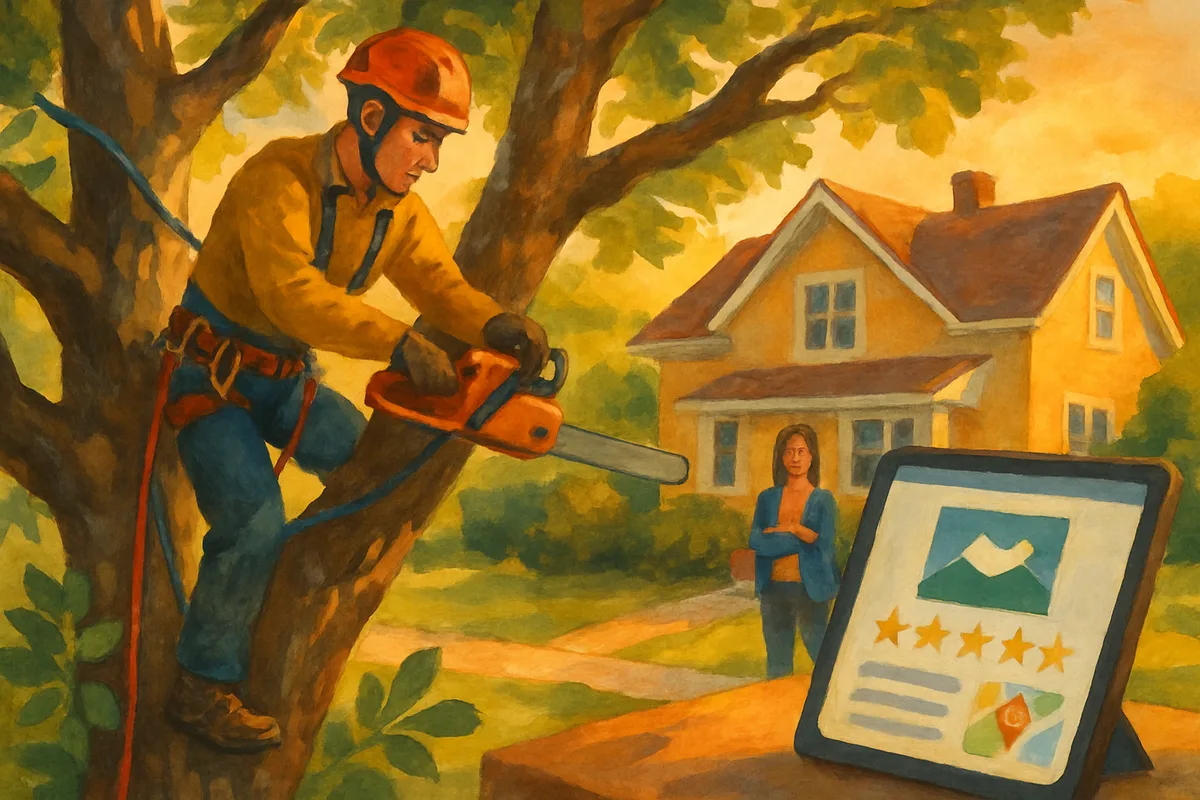
Tree service is one of the most trust-driven home service categories there is. Homeowners are inviting a crew with chainsaws and heavy equipment onto their property, often to remove or work near a tree that is close to their house. They are not hiring the cheapest option. They are hiring the company that looks most capable, most professional, and most trustworthy before anyone picks up a phone.
That dynamic shapes how tree service marketing works. The companies that build consistent pipelines are not just generating clicks. They are showing up where homeowners are looking, with proof that they do safe and skilled work, and making it easy to take the next step.
This guide covers the marketing channels and strategies that drive steady tree service leads.
Local SEO: Show Up When Homeowners Search for Tree Help
When a branch falls on a fence after a storm or a homeowner finally decides to take down the oak that has been dropping limbs near the house for two years, they open Google. "Tree removal near me," "tree service [city]," and "emergency tree removal" are how most residential leads start. If your company is not in the map pack or on the first page, you are invisible to the majority of people actively looking to hire.
The highest-leverage local SEO moves for tree services:
- Optimize your Google Business Profile thoroughly - complete every section: service areas covering every city and suburb your crew reaches, the full range of services you offer (removal, trimming, stump grinding, emergency, lot clearing, crane work), and photos of completed work. Before and after shots of a clean removal carry enormous weight. Your GBP is the single most visible asset in local search for tree services.
- Build service and location pages for each market you serve - one "tree service" page cannot rank for "tree removal [suburb]" across your service territory. Build individual pages for each service (tree removal, tree trimming, stump grinding, emergency tree service, land clearing) and each city or neighborhood you cover. This is the structure that earns you multiple rankings and covers the full range of queries your future customers are searching.
- Target storm-specific queries - "storm damage tree removal," "emergency tree service [city]," and "tree fell on house" are high-intent searches that spike after weather events. A dedicated emergency services page that addresses these queries specifically can capture a disproportionate share of storm-driven leads year-round, not just when a storm hits.
- Collect reviews from every job - tree service customers leave detailed reviews because the work is significant. A crew that does clean, professional work on a difficult removal and asks for a review at the end has a repeatable advantage. Send a text with a direct Google review link within 24 hours of completion.
For the full search optimization playbook for tree companies, see our guide to tree service SEO.
Google Ads for Tree Service: Fast Leads in Competitive Markets
Organic rankings build over time. Google Ads delivers calls within days of launch. For tree service companies competing in markets where established companies have years of reviews and local SEO momentum, paid search is often the fastest way to get in front of motivated homeowners.
What works in tree service paid search:
- Prioritize emergency and removal terms - "emergency tree removal [city]," "tree removal near me," and "tree fell on [fence/house/car]" are the highest-intent queries in the category. These homeowners have a problem they need solved. Bid aggressively on them.
- Use call extensions and call-only ads - tree service customers want to talk to someone who can give them a ballpark estimate and explain what the job involves. Make calling the easiest action on every ad, especially on mobile.
- Exclude informational searches as negatives - "how to remove a tree," "tree removal cost estimate," and "DIY tree trimming" are research queries, not buying signals. Add them as negative keywords to stop paying for traffic that will not convert.
- Increase bids after storms - have a protocol in place to raise bids on storm and emergency terms within hours of a significant weather event in your area. Every hour you wait costs leads to competitors who are faster to respond.
Referrals and Neighbor Marketing: Your Highest-ROI Lead Source
In tree service, the work is visible. When a crew is taking down a large oak in a residential neighborhood, every neighbor within a few houses notices. The companies that capitalize on this consistently outperform those that rely only on paid acquisition.
- Door-hang surrounding properties after every job - after completing a removal or major trimming job, put a door hanger on the four or five nearest properties. Mention you just finished work next door and offer a free estimate for any tree work they need. The social proof of a nearby completed job dramatically improves response rates versus cold outreach.
- Ask for referrals at the final walkthrough - when the customer is happy and the site is clean, ask directly: "If any neighbors or friends need tree work, we'd really appreciate the introduction." A satisfied tree service customer whose yard looks great is one of your best salespeople.
- Build relationships with adjacent trades - roofers, landscapers, general contractors, and property managers regularly encounter trees that need attention. A reciprocal referral relationship with a local roofer (you refer them on storm jobs, they send you customers with overgrown trees near the house) generates consistent leads at zero cost.
- Partner with real estate agents - real estate transactions frequently uncover trees that need to be removed or trimmed before listing. A relationship with a few active agents in your market puts you in front of time-sensitive, high-motivation customers regularly.
Reputation and Reviews: The Trust Signal That Converts
Because tree service involves significant risk to property and people, homeowners scrutinize reviews more carefully than they do for almost any other home service. A company with 180 reviews at 4.8 stars will capture a larger share of searchers than one with 40 reviews at 5.0, because volume signals both experience and reliability.
Build a review system that runs automatically:
- Text a direct review link to every customer within 24 hours of job completion
- Have the crew lead mention the review request verbally at the final walkthrough
- Respond to every review, positive and negative, within 48 hours
- Address negative reviews specifically and professionally -- tree work sometimes goes sideways, and how you respond to a complaint tells prospective customers more than any positive review does
Before and After Photos: Your Most Effective Marketing Asset
Tree work produces dramatic visual results. A yard before and after a large removal, a property before and after a hazardous dead tree comes down, a storm-damaged yard before and after emergency cleanup -- these images do more to convert a prospect than almost any ad copy you can write.
Build a photo collection habit into your operations:
- Have a crew member take a "before" photo before starting every significant job and an "after" photo after the site is clean
- Organize photos by job type in a shared folder (removal, trimming, stump grinding, storm damage, lot clearing)
- Use the best photos across your GBP, website service pages, Google Ads image extensions, and social media
- Short videos of the removal process, especially challenging removals with a crane or in tight spaces, perform exceptionally well on Facebook and Instagram and demonstrate skill and safety to skeptical homeowners
Seasonal Marketing: When to Spend and When to Pull Back
Tree service demand follows seasonal patterns. Aligning your marketing spend to demand increases your return and reduces waste.
- Late winter and early spring - homeowners assess winter damage and plan removals before new growth makes access harder and job sites messier. This is one of the highest-conversion periods for tree removal. Spend aggressively on removal and trimming terms.
- Summer storm season - emergency and storm damage queries spike. Have bids and campaigns ready to scale up immediately when weather events drive demand in your market. Storm leads are time-sensitive and go to whoever is fastest.
- Fall - dead trees are most visible after leaves drop, and homeowners want work done before winter ice and snow adds risk. Promote dead tree removal and winter storm preparation specifically. Stump grinding is also easier before the ground freezes.
- Winter - dormant season in many markets, but a good time for brand-building, review collection from the prior season, and preparing spring campaigns. If your market sees significant ice storms, keep emergency campaigns active year-round.
Working With a Tree Service Marketing Partner
Managing Google Ads, local SEO, review collection, referral programs, and social media while running a crew-dependent field service operation is a full-time job on top of running the business. Most tree service owners built their company around technical skill and safety, not marketing systems.
A tree service marketing partner who understands the trust dynamics of the category, the seasonal demand curve, and the local search environment can manage these channels more efficiently than a generalist agency. If you want to explore what a focused marketing effort could do for your tree service company, book a strategy call with Silver Path Marketing.
For more on building your search rankings specifically, see our guide to tree service SEO and the broader home services marketing hub.