Auto Repair Shop Marketing: Win Local Search and Build Lifetime Customers
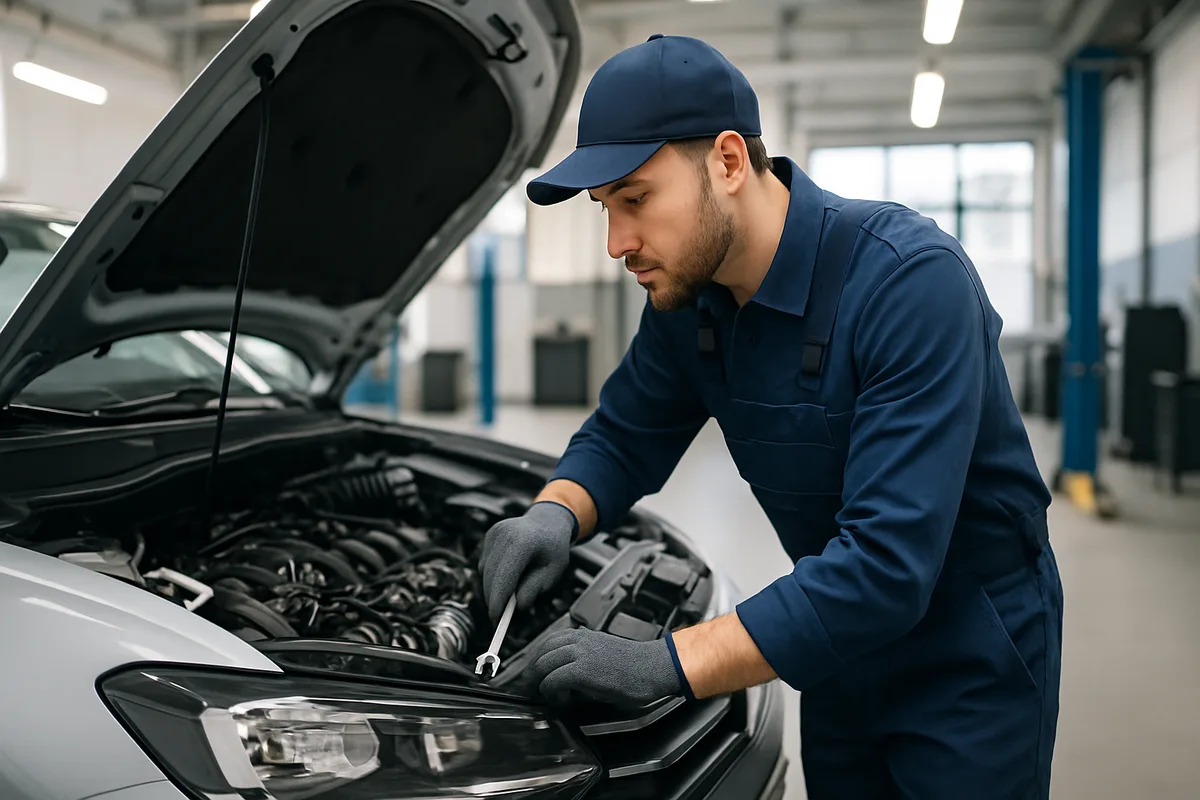
Auto Repair Shop Marketing: Win Local Search, Build Repeat Customers, and Get More Cars in the Door
Auto repair is a high-frequency, high-trust local service. The average vehicle owner needs service multiple times per year -- oil changes, tire rotations, brake service, unexpected repairs -- and once they find a shop they trust, they return consistently and refer friends and family. The marketing job has two phases: winning the first visit from a new customer, and building the relationship that turns that visit into a lifetime customer. The first phase is a local search problem. The second phase is a communication and loyalty problem.
The category is also highly competitive in most markets. Every metro area has a mix of independent shops, regional chains, and national brands (Jiffy Lube, Midas, Firestone, Pep Boys) competing for the same customer base. Independent shops compete on trust, expertise, and relationship -- advantages that need to be visible in the marketing to overcome the brand recognition of national chains.
Google Business Profile for Auto Repair Shops
- Category: "Auto Repair Shop" is the primary GBP category. Add secondary categories that match your services: "Auto Body Shop" if you do collision repair, "Tire Shop" if you stock and sell tires, "Oil Change Service" if you want to surface for quick-service searches, "Transmission Shop" for drivetrain specialists. Select the category or categories that match what you want to rank for -- each secondary category opens up a set of service-specific search terms.
- Service list detail: build a complete services list in GBP that names every service by the search term customers use: oil change, tire rotation, brake service, brake pad replacement, battery replacement, alternator replacement, timing belt, transmission service, engine repair, AC service, check engine light diagnostic. Named services in GBP correlate with appearing for those service-specific searches ("brake repair near me," "check engine light [city]").
- Booking link: Google allows adding a booking URL to the GBP profile. If you use an online scheduling platform (CARFAX Service, Tekmetric, RepairSmith, or your own website scheduling), connect it. Reducing the friction from "found the shop in search" to "appointment booked" captures customers who are ready to act but do not want to make a phone call.
- Review volume and recency:**strong> auto repair reviews are used by customers making a trust decision -- they read reviews specifically to see whether other people trusted the shop with their vehicle and had a good experience. Review recency matters; a shop with 200 reviews and the most recent from 18 months ago raises more doubt than a shop with 80 reviews and multiple from the past month. Set up a systematic post-visit review request (text message, email, or printed card) to maintain review flow.
Auto Repair Shop Website
- Service pages for every category:**strong> individual pages for oil change service, brake service, transmission service, tire service, and diagnostic service serve two purposes: they capture service-specific search traffic, and they demonstrate the depth of the shop's capability. A page for "brake service" that explains what the shop inspects, what parts it uses, and what the service includes is more persuasive than a general "we do brakes" mention on the services page.
- Transparent pricing where possible:**strong> auto repair customers are frequently anxious about unknown costs. Shops that post standard service pricing (oil change price range by oil type, brake pad replacement price range by vehicle class) reduce the anxiety of calling for a price and convert more website visitors into appointment requests from customers who can see the pricing is reasonable.
- Technician credentials:**strong> ASE-certified technicians, factory certifications for specific makes (BMW, Mercedes, Toyota), and specialty training are trust signals that differentiate independent shops from mass-market chains. Feature these prominently in the About section and on relevant service pages -- a customer with a BMW wants to see that your shop has BMW-certified technicians before trusting you with a $60,000 vehicle.
- Warranty information:**strong> parts and labor warranties (12 months/12,000 miles on parts and labor is common at quality independent shops) are a confidence signal for customers deciding between shops. State your warranty terms explicitly -- many customers do not know that quality independent shops offer warranties comparable to or better than dealer service.
Customer Retention for Auto Repair
- Text and email follow-up:**strong> a message at 3,000 miles before the next oil change ("Your car is due for service around [date] -- schedule here") retains customers who would otherwise default to whichever shop they see first when the service light comes on. This is the single highest-ROI marketing activity for a shop with an established customer base -- it costs almost nothing and captures the repeat visit from customers who would otherwise drift to a competitor.
- Vehicle health reports:**strong> digital vehicle inspection reports (DVI) with photos of the items inspected, advisory notes on items to watch, and recommended service items sent via text after every service visit demonstrate thoroughness and plant the seed for future service recommendations. Customers who receive a DVI trust the shop more and convert on advisory recommendations at higher rates than customers who receive only a verbal explanation.
- Loyalty programs:**strong> simple punch-card or points-based loyalty programs (earn one point per dollar, redeem at 200 points for $25 off) increase return visit frequency and give customers a reason to say the shop name when referring friends ("I use Madison Auto -- they have a loyalty program").
Paid Advertising for Auto Repair
- Google Ads for service-specific searches:**strong> searches like "oil change near me," "brake repair [city]," and "check engine light diagnosis [city]" convert at high rates because the searcher has an immediate need. Google Ads for these terms appears above the map pack and organic results. Target the specific services where the shop's ticket size and margin justify the ad spend -- an oil change at $60-80 margin may not justify a $15 CPC, while a brake job at $300-500 margin does.
- Google Local Services Ads:**strong> the Google Guaranteed program for auto repair allows the shop to appear at the top of local search results with a verification badge. The per-lead billing model (pay per qualified call, not per click) can be more cost-effective than standard Ads for shops where call volume is the primary metric.
- Neighborhood-targeted social ads:**strong> Facebook and Instagram ads targeted to a 5-mile radius of the shop, featuring a current offer (oil change special, free tire rotation with any service), reach potential customers in the shop's primary service area who may not be actively searching but will recall the shop name when a service need arises.
Tracking Auto Repair Marketing
- Source of first visit:**strong> tracking how new customers found the shop (Google search, Google Maps, Facebook ad, referral from a friend, drove by the shop) informs where to invest marketing budget. A shop that gets 60% of new customers from Google Maps should invest heavily in GBP optimization and review generation; a shop that gets 40% from referrals should invest in a referral incentive program.
- Customer lifetime value:**strong> the average revenue generated by a customer over the length of the relationship determines how much it is worth spending to acquire a new customer. A customer who visits 3 times per year at $250/visit and stays for 5 years has a lifetime value of $3,750 -- enough to justify significant acquisition cost per new customer.