Traditional Advertising for Senior Living: What Works Offline
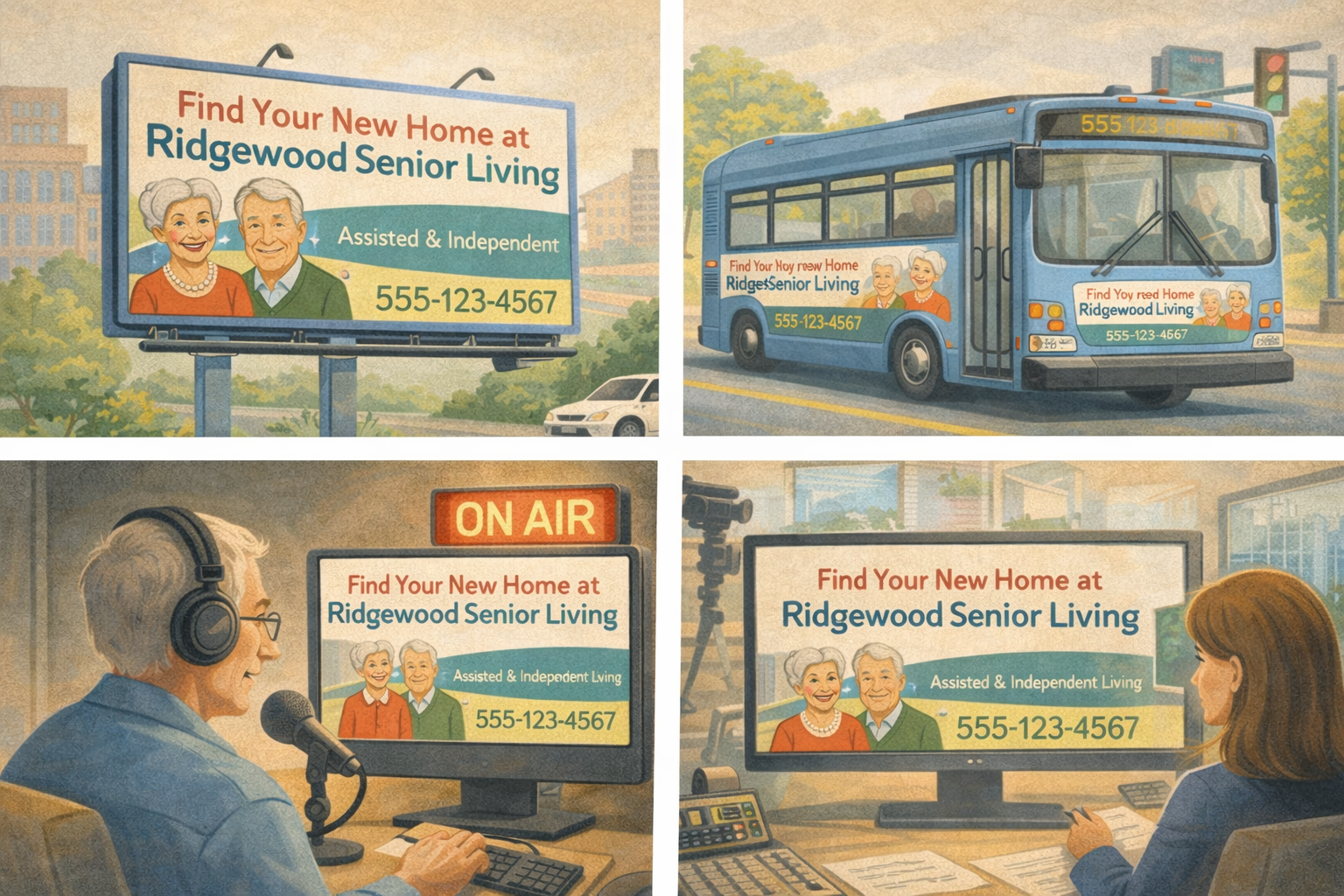
One of the first things people think about when they think of marketing is often traditional advertising — radio, TV, billboards, direct mail, and newspapers. And while digital marketing offers more precise targeting and tracking, traditional advertising still has a place in a well-rounded senior living marketing strategy.
The Case for Digital-First Marketing
As someone who started a digital marketing agency, I'll admit a natural bias toward online marketing. Here's why: with digital marketing, you can reach people where their attention actually is — on their devices. You can target people based on what they're actively searching for right now. You only pay when they click or call. And you can track the results with much more precision than traditional advertising allows.
That said, research shows that stronger brand awareness leads to higher engagement with online ads. People who already know your name from a decade of traditional advertising are more likely to click your online ad when they see it — and more likely to buy from your website. So the two approaches can reinforce each other.
Traditional Advertising Channels for Senior Living
Traditional advertising channels worth considering for senior living communities include:
Radio — Reaches a local audience during commutes and throughout the day. Can be effective for building name recognition in your community.
TV — Higher cost but broad reach. Cable TV allows for some demographic targeting.
Billboards — Excellent for building awareness in your local area, especially if your community is near a major road or highway.
Bus ads — Cost-effective local awareness building in urban areas.
Direct mail — Allows geographic and demographic targeting. Can drive people to a specific landing page or phone number for tracking.
Newspapers and local magazines — Particularly effective if your target audience includes older adults who regularly read print media.
Event sponsorships — Build goodwill and name recognition in your community. Great for reaching the referral network of healthcare professionals, social workers, and discharge planners who recommend senior living communities.
Tracking Traditional Advertising Results
Traditional advertising does not offer the precise tracking that digital channels do — but that doesn't mean you're flying blind. To help measure results from offline campaigns, use:
Dedicated landing pages specific to each campaign (include a QR code on print materials)
Unique call tracking phone numbers for each ad channel and campaign
Asking new families how they heard about you — and recording that information in your CRM
While no marketing attribution method is perfect, these steps help you better understand what's working. And your sales team members can ask every new family how they first heard about your community and record that in the CRM.
How to Think About Traditional Advertising
When combined with digital marketing, traditional advertising can support your overall strategy and strengthen your local reputation. You may not always be able to measure it with the same degree of precision as your online marketing, but it's possible that people will be more likely to click your online ads if they've already seen your name in your community through traditional channels.
The key is to not let traditional advertising replace your digital marketing — instead, let it complement it. Start with a solid digital foundation (website, Google Ads, SEO, social media), then layer in traditional channels once your digital strategy is working well.